Features · External costs
External costs that land in the project
Upload a supplier invoice and the form fills itself: docket reads an e-invoice directly, and any other PDF with AI if you want it to. Then it belongs to the project and the quote it was for. So the margin is right, and the artists' social security levy (KSK) sits right next to it.
No card, no sales call. Project managers and admins see external costs.
Read, assign, recharge.
E-invoice or PDF: docket reads it.
docket reads e-invoices as ZUGFeRD or Factur-X PDFs directly: supplier, number, date, amount and VAT rate are in the form as soon as the file is chosen, no AI involved. Any other PDF is read by an AI if you want it to, with a click on "Read with AI" or on every upload. You check and save, with the invoice right next to the form.
- E-invoices without AI and without a quota
- The AI is off until an admin switches it on: Mistral in the EU through docket, or your own key
- Suppliers docket doesn't know yet are created on the spot
- The same invoice can't be entered twice
- Other currencies at the ECB reference rate of the invoice date
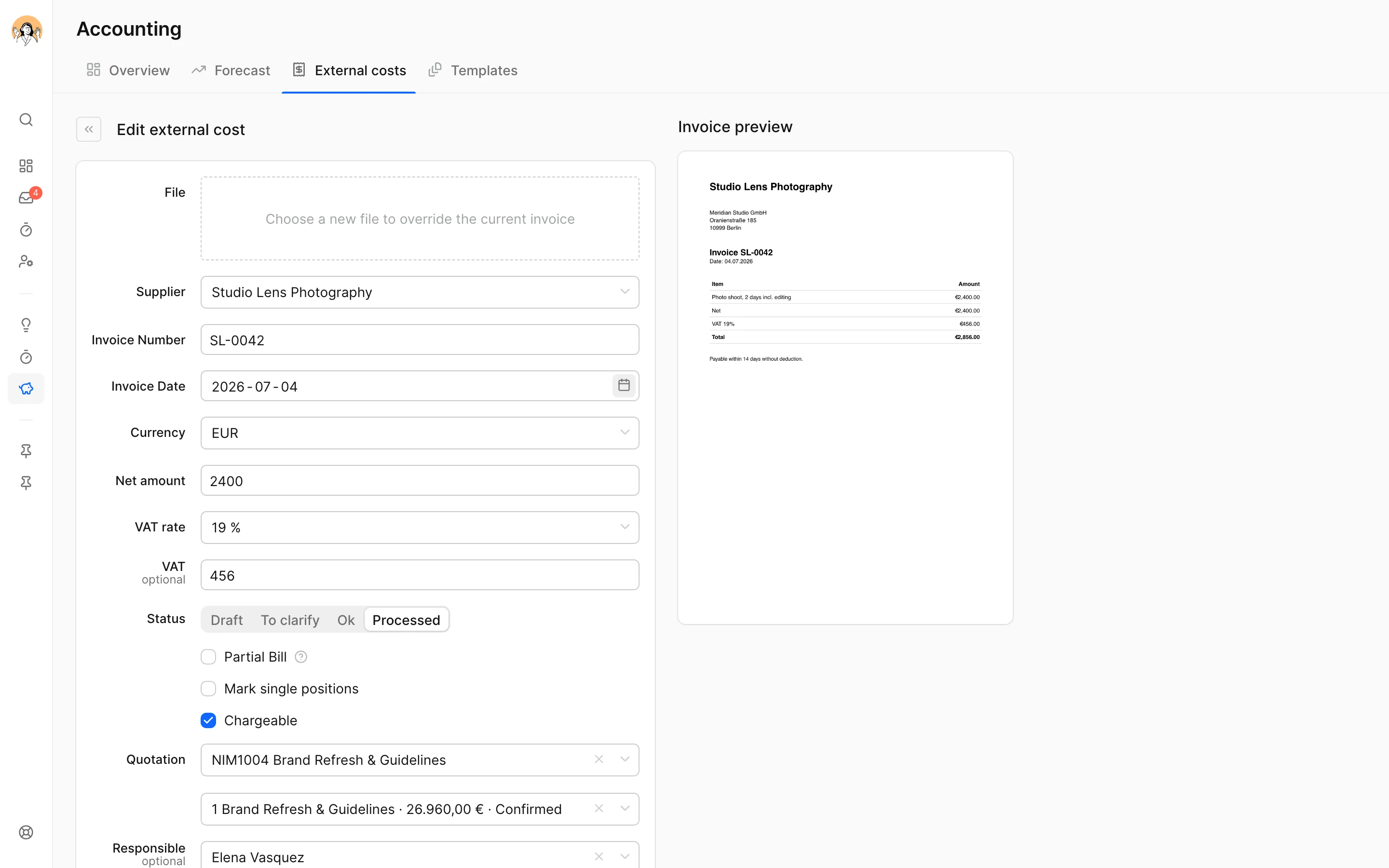
The KSK levy, without doing the maths.
Mark a supplier as subject to the levy, say a photographer or a freelance copywriter. docket then shows the levy on each of their invoices, at the official rate of the invoice year, 4.9% in 2026. It counts in the project like any other external service.
- The rate follows the invoice year, older invoices keep theirs
- German workspaces only: Austria and Switzerland have no such levy
Every external service on its quote.
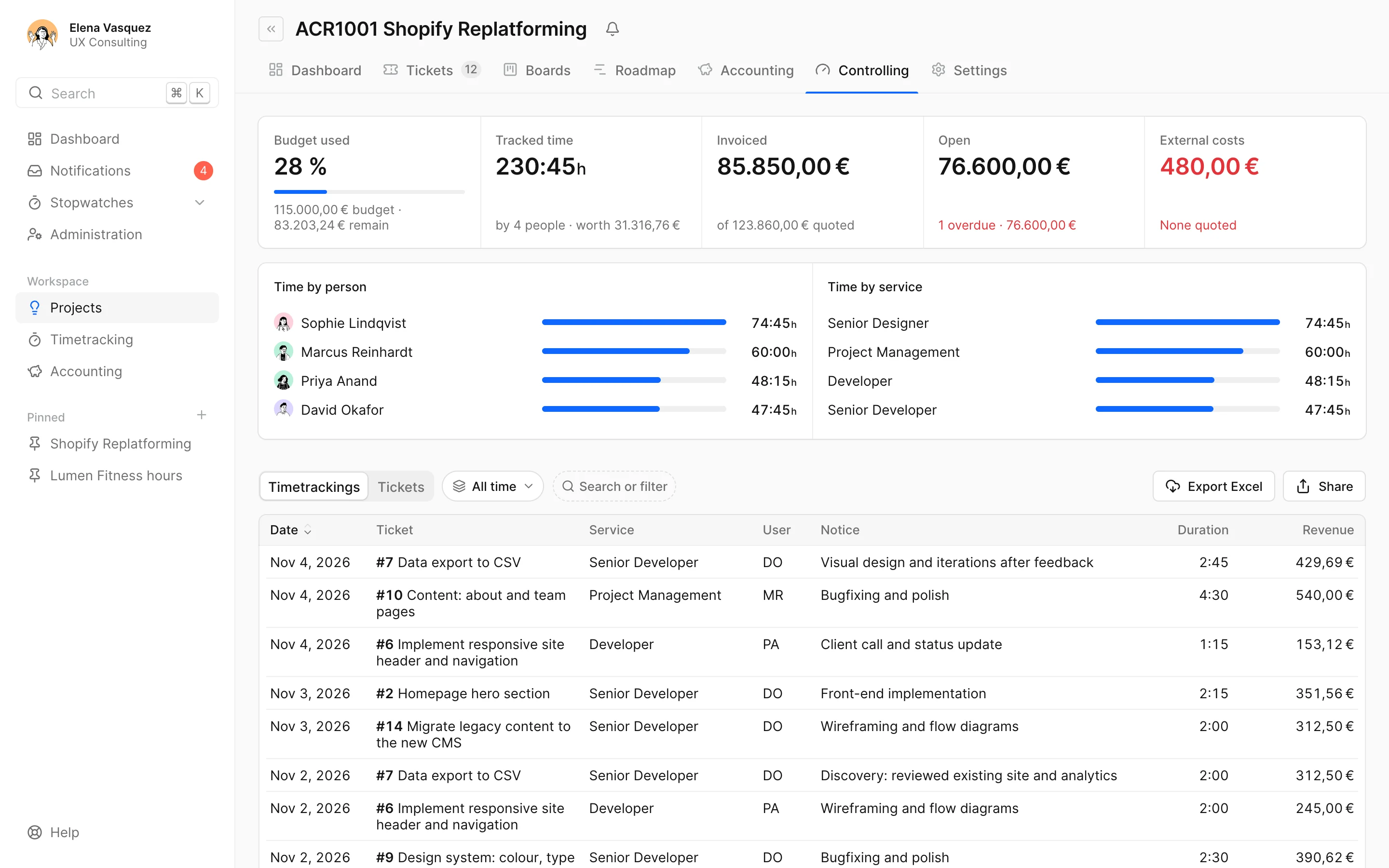
An invoice belongs to a project and a quote, or in parts to several. Per assignment you decide whether it's recharged. In controlling it stands next to the hours, against the external services the quote sold.
- Partial amounts, marked on the PDF, with the remainder still open
- The assigned invoices as a PDF bundle for the client
- Quote deleted? docket asks where the costs should go
Short questions, short answers.
What is the KSK levy?
The Künstlersozialabgabe is a levy that businesses in Germany pay on fees to self-employed artists and writers, such as designers, photographers or copywriters. It funds their social insurance through the Künstlersozialkasse. The rate is set every year; for 2026 it is 4.9%. Whether and for what you owe it is a question for your tax adviser.
How does docket know which invoices are subject to it?
You mark the supplier as subject to the KSK once. From then on docket shows the levy on each of their invoices, at the rate of the invoice's year.
Does docket read suppliers' e-invoices?
Yes. When the e-invoice comes as a ZUGFeRD or Factur-X PDF, docket takes the supplier, invoice number, date, net amount and VAT rate straight from its data, without AI. Any other PDF is read by an AI if you want it to.
Which AI reads the invoices?
By default Mistral, an AI provider in the EU, through docket and within the workspace's monthly quota. With your own key from Mistral, OpenAI or Anthropic, invoices go to your account there. An admin switches it on; until then nothing goes to an AI.
What about invoices in francs or dollars?
You enter the currency and amount as the invoice states them. docket converts at the ECB reference rate of the invoice date, or you enter the amount your bank actually charged.
Who sees external costs?
Project managers and admins. Whoever is made responsible for an invoice gets an email when it's assigned to them. More on external costs in the docs.
Every invoice where it costs money.
Try it free for 14 daysNo card. On to all features or to quotes and invoices. Questions? info@docket.rocks.
